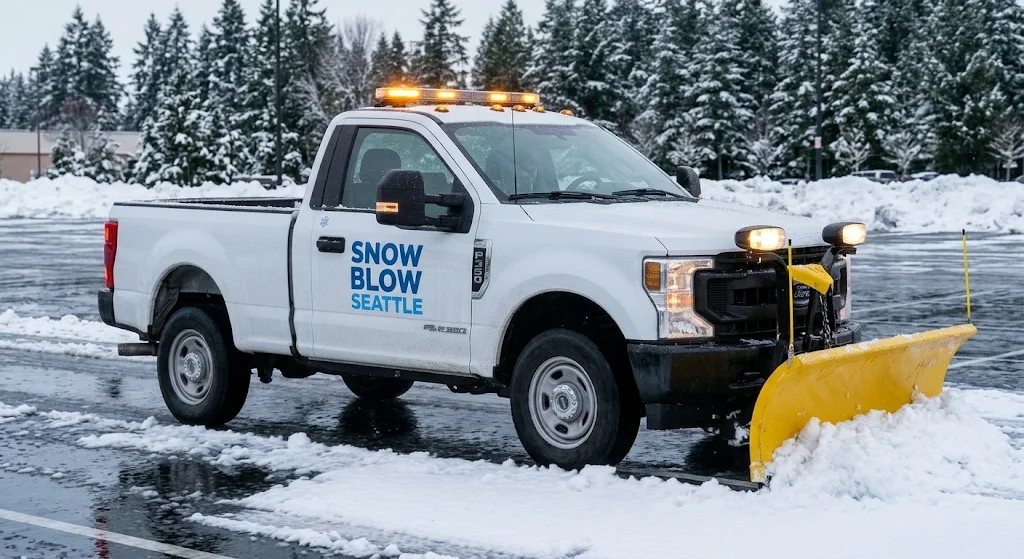
Yes, but not often, and that is exactly the problem. For anyone responsible for commercial snow removal in Seattle, the question is less about how many inches fall and more about how rarely it happens. A city that sees a few snow or ice events in a typical winter does not keep much plowing equipment on hand, so each event overwhelms roads, lots and vendors at once.
Does Seattle Get Snow? How Often Winter Weather Hits
A typical winter
In most winters, Seattle sees light snow that melts within a day, plus a handful of nights below freezing. Rain is far more common than snow. Lowland neighborhoods near Puget Sound stay warmer than the hills, the foothills and the Cascade passes, which get much more snow and ice.
The years that break the pattern
Some winters bring an arctic air mass that sits over the region for days. February 2019 is the example most property managers remember: repeated snowfalls, deep cold and days of limited mobility. Years like that are rare, but the cost of being unprepared in one is high.
Seattle Snow Season: When Ice and Snow Are Most Likely
Snow and ice risk in Seattle runs roughly from late November through February, with the greatest odds of a cold snap in December, January and early February. Early and late storms do happen, so contracts and crew staging should not assume a fixed calendar.
- Freezing rain and black ice are the most common hazard for parking lots and entrances.
- Light snow on cold pavement turns into ice after traffic compacts it.
- Overnight freezes after daytime melt refreeze on shaded walkways and ramps.
- Heavy accumulation is uncommon but shuts down streets and delays crews.
What Seattle Winter Weather Means for Your Property
Because snow is occasional and ice is frequent, the services that matter most are pre-treatment before a freeze and fast de-icing after one, with plowing as the backup for deep storms. Properties on hills, in shade or with long ramps carry more risk than flat open lots.
Occasional storms also mean vendors are rarely staged unless the contract requires it. Before the season, review how to evaluate vendors in how to choose a commercial snow removal company so your site is on a staged route before the first forecast, not after it.